
Roots and Circuits is our latest programme designed to support humans in having a healthier and more effective relationship with technology. It is centred on the understanding that our use of technology, its growth and expansion into our everyday lives, isn’t something many of us consented to and yet we seem to be expected to keep going on this uncertain, seemingly unsustainable path.

Many people are experiencing their distress at this expectation both in day-to-day life and at work, with added pressure to get on board. This comes at a time when mental health is already under considerable strain. According to the Health and Safety Executive, work-related stress, depression and anxiety accounted for 22.1 million working days lost in Britain in 2024/25. While technology is far from the only cause, its growing demands and relentless pace raise important questions about how we protect our wellbeing. At Rewylding, we are not anti-technology or AI use; however, we recognise the importance of working sustainably and regeneratively with a human centred approach. So, we designed a programme in partnership with Raphael Dennett (University of Exeter Business School) that helps humans bridge the divide between their wellbeing and the demands of being productive in a landscape that continues to ask for interaction and increased use of technology.
Roots and Circuits is part digital detox retreat, part ritual, part think tank, designed to help people return to nature, themselves and the community, and to question how they can improve their relationships and outcomes when interacting with technology before gently bringing them back to the world with a calmer nervous system and productive steps forward.
What happens

Sessions run in nature, built around activities and moments meant to let people switch off, reflect, learn and connect with each other properly, most of it away from any screens and for good reason: Oxford named “brain rot” its word of the year for 2024, the mental fog that follows too much low-value scrolling, and always in demand emails and messages are linked to real drops in wellbeing (Sharma et al., 2022). Time goes instead into working with natural materials, gathering and eating together, and into being present in beautiful natural settings. Using all our senses and connecting with ourselves and others through facilitated conversation, structured thinking about our working life, and science backed practices for thriving under pressure.
There is more behind the time on the land than simply being in beautiful nature. A study of almost twenty thousand people in England found that those spending at least two hours a week in nature reported significantly better health and higher wellbeing than those spending little (White et al., 2019). A single day outdoors goes a long way to dramatically improving how we are feeling.
The technology question
Most people can tell you within a second whether artificial intelligence has made their work quicker, but has it actually made it easier, more productive, reduced worry, hours, or stress? Most people are finding that it is making them work longer and increasing their levels of stress and anxiety.
The research over the past two years has not made for comfortable reading. A UK study of 666 people found that higher use of AI tools tracked strongly with lower critical thinking, through cognitive offloading (Gerlich, 2025), and MIT Media Lab found reduced cognitive engagement during AI-assisted writing that was still measurable once the assistance was taken away (Kosmyna et al., 2025). None of this is the result of anyone deciding, in a single moment, to think less; it happens because each handover seems like a good idea on its own, and the effect over time is hard to notice.

Roots and Circuits does not take a position on whether these tools should be utilised more, or less, since both are ways of avoiding the difficult question underneath. What the programme works towards instead is a deliberate chosen relationship with these tools: knowing which parts of your thinking you are content to hand over, which you are not, and holding back enough attention to notice the difference as it happens. The land, the food and the activities rebuild that capacity; the conversation and reflection help you decide how to build a healthy and effective relationship with technology that works for you.
What you come away with
- A clear read about where these tools help your work, and where they cost more than they are worth.
- Working rules for your own use of AI and technology, both professionally and personally.
- Ways to improve your attention, and a steadier way of working in a noisy and stressful world.
- Practices to help you reconnect with your creativity, recognise new opportunities and shape a future in which you can thrive.
- Time spent alongside other people, getting in touch with nature, and time to relax and reconnect with yourself.
For teams
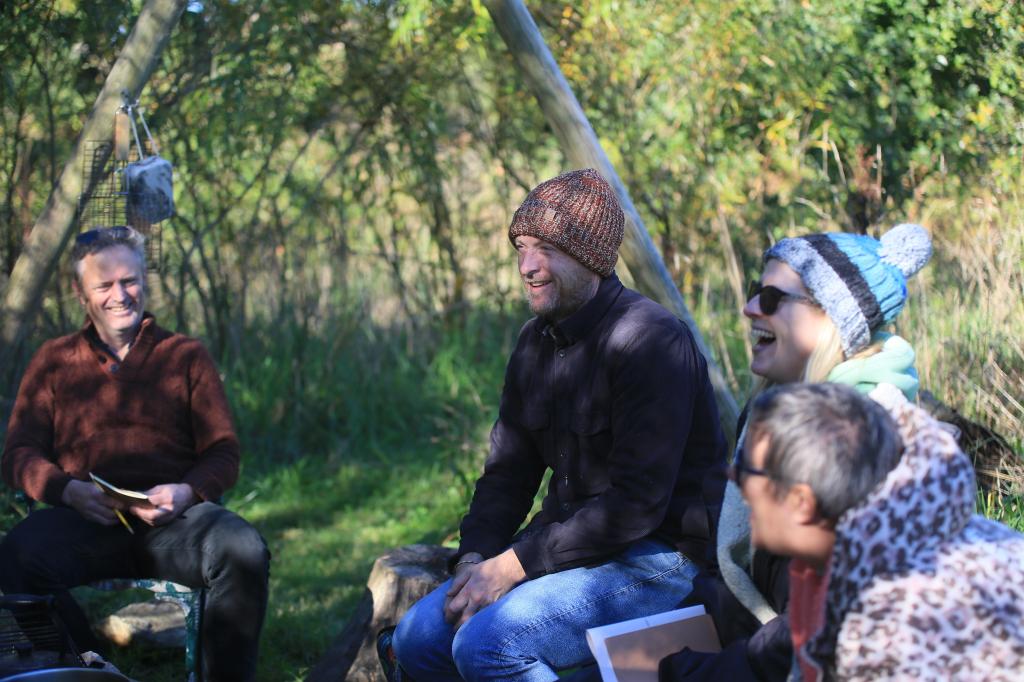
There is a practical case underneath the personal one. AI is moving through most organisations faster than people can build an effective relationship with it, and the absence of that relationship tends to show up as resistance to change, time off through stress, and less willingness to find innovative solutions to problems. For employers and public services alike, helping people adapt to technological change without sacrificing their wellbeing is becoming an increasingly important challenge. Roots and Circuits closes that gap not by pushing AI adoption faster or slower, but by rebuilding the attention and judgement that make informed choice possible: groups come back with sharper thinking, a shared vocabulary for how to use these tools effectively, and a way of working that is sustainable.
Testimonials
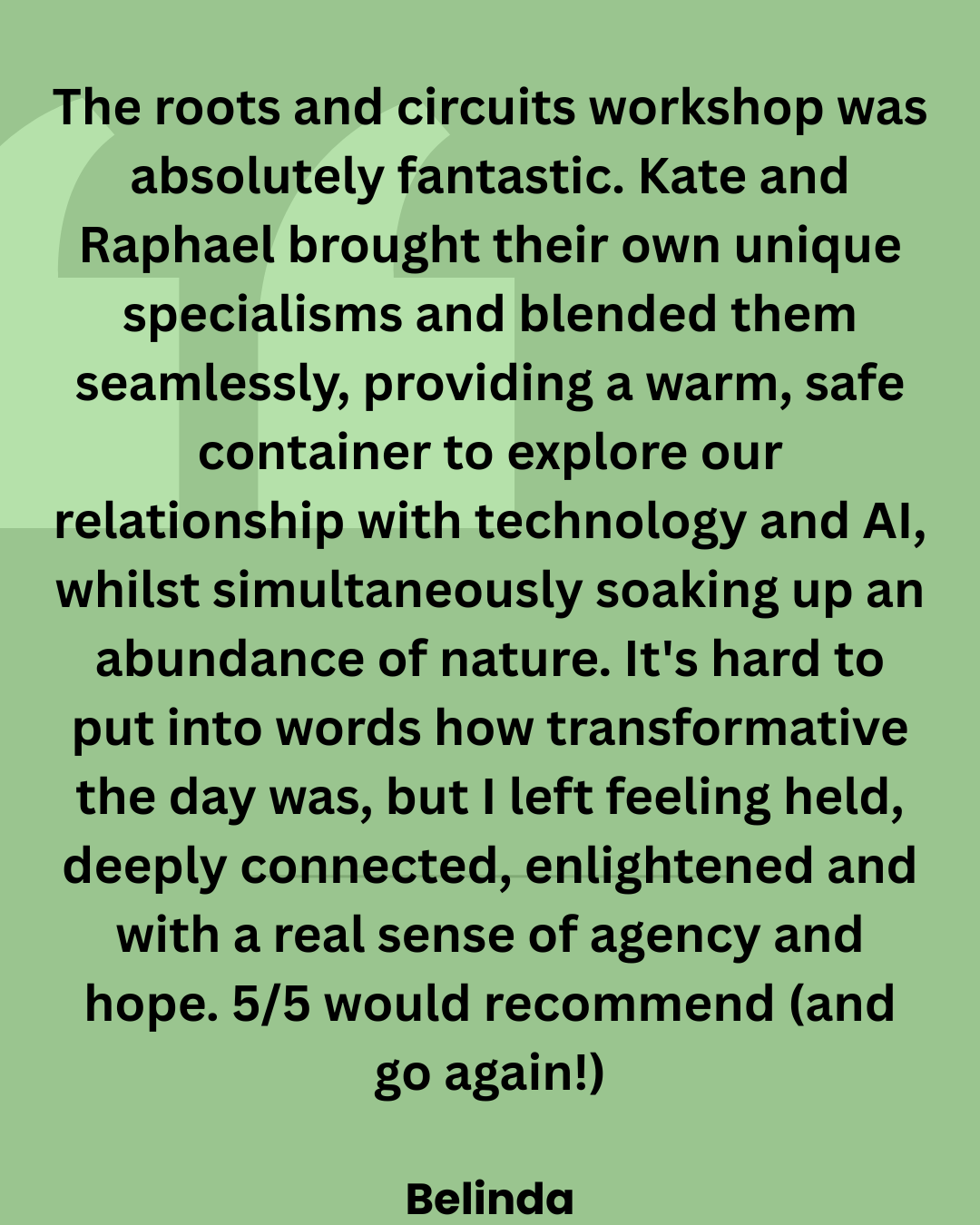
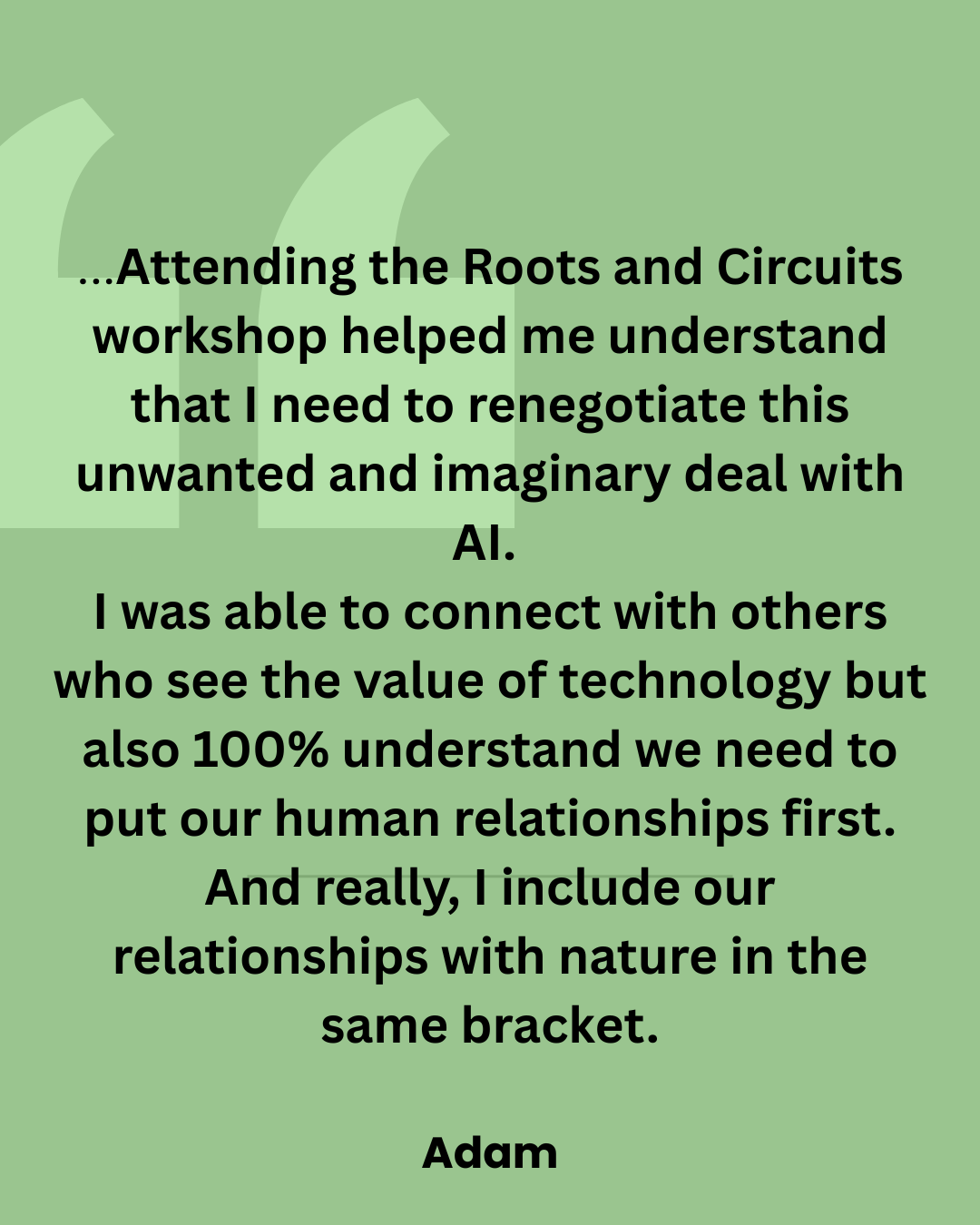
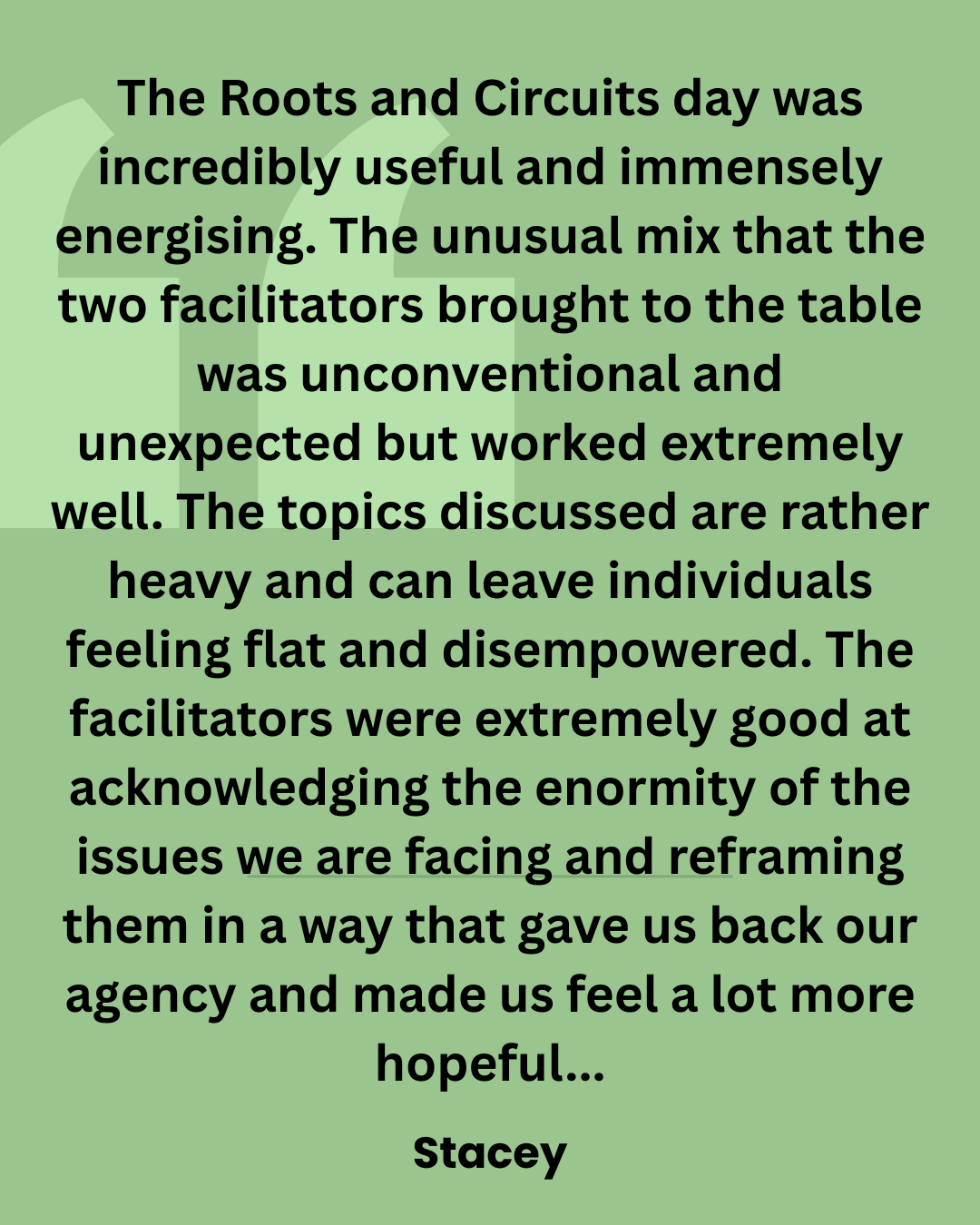
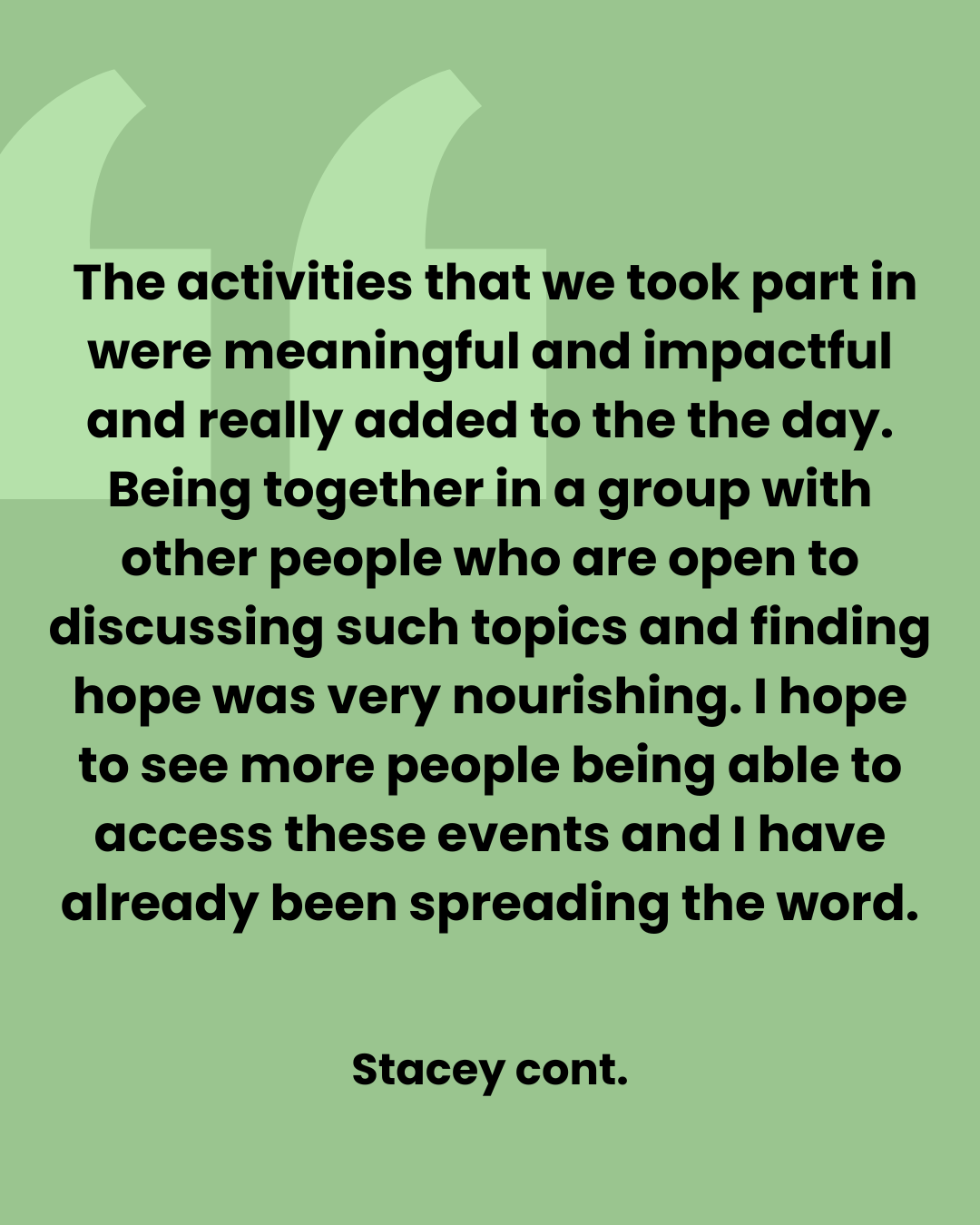
This programme is currently available as a single day programme with scope to expand. We tailor the content of each session depending on group size and industry or requirement.
Please get in touch to discuss needs and availability using the form below.


